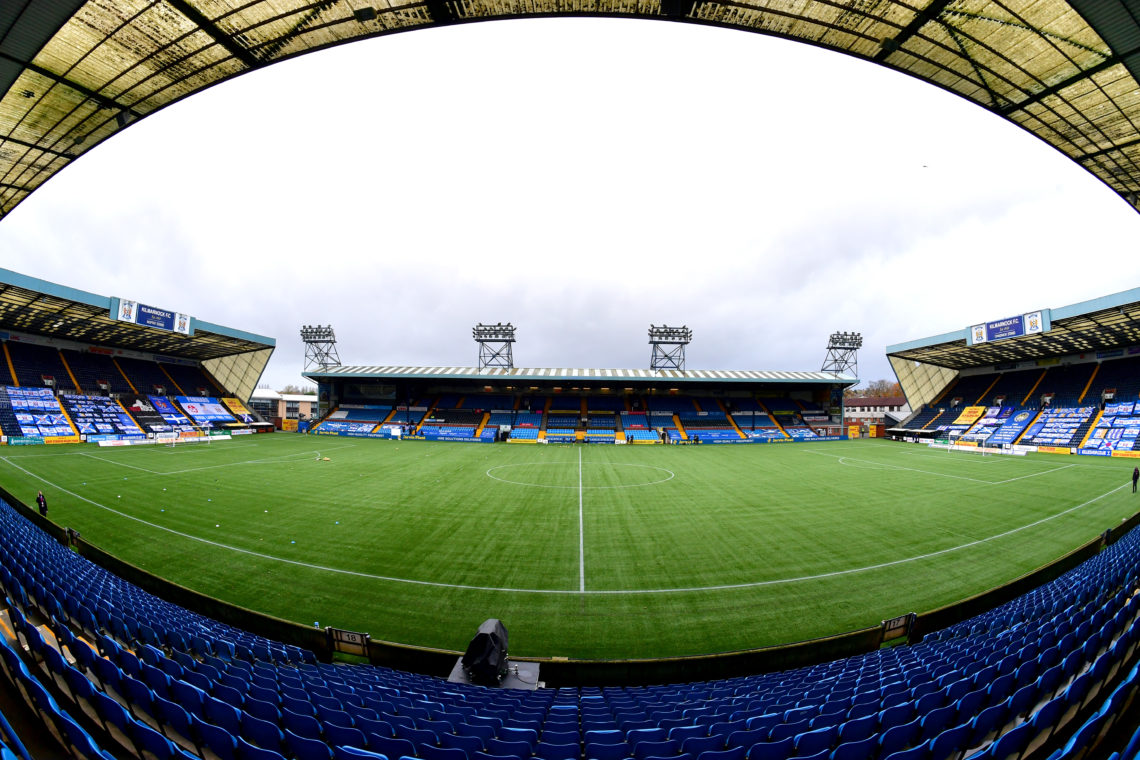


The SFPL could be set to answer Philippe Clement’s plastic pitch plea as he brands Kilmarnock’s surface a “disadvantage” to Rangers.
The Belgian manager has followed his Ibrox predecessors in lamenting the use of plastic pitches in Scottish football’s top flight by pointing to Europe’s top leagues.
Rangers already have a dodgy enough record at Rugby Park without playing on a surface which Philippe Clement claims transforms any game which takes place on it.
But according to reports from earlier in the season, the SPFL could yet answer the Rangers manager’s pleas with plastic pitches potentially set to be outlawed from NEXT season.
Philippe Clement slams plastic pitches
Speaking to the press ahead of Rangers’ trip to Kilmarnock, Philippe Clement was honest and upfront about his opinion on the plastic pitch at Rugby Park.
Whilst the Ayrshire club do have plans to rip the surface up and return to grass in 2026, relegation-threatened Livingston have resisted calls due to the expenses involved.
Clement claims that whilst there will be no excuses at Ibrox, the fact the likes of injury-ravaged Kemar Roofe has been ruled out v Kilmarnock due to the surface is an immediate “disadvantage” to Rangers.
“We will approach that game like all of the games,” said Clement. “With respect for the opponents but also with respect for ourselves.
“Although you need to adapt to a totally different kind of football because of the pitch. It was not easy, but we did it before in Livingston and we need to do it again.
“It’s only one importance and that’s getting three points but it will be a totally different game than we normally play.”
Later asked about the challenge on the plastic pitch, Clement said: “There will be a lot of things (different). I made the comparison with a game of tennis.
“With playing at Wimbledon or playing on a clay court, it’s a little bit like that. Of course it’s different sports.
“The ball goes faster so you need to more precise. On a grass pitch when you give a pass it slows down after a while, on an artificial it keeps its speed or it goes even faster along the way. The ball bounces in a totally different way. If you give passes in the air or shots at goal you cannot go with your foot underneath the ball like you normally do on a grass pitch so you need to adapt your body towards that. Also the way of turning, the way of sprinting, the way of stopping is also different, so that’s a lot of things that are different.
“It is what it is. In the league, there’s a decision that for the moment it’s still possible to play on those surfaces. I don’t think in Premier League it’s still possible, or in La Liga or in the top leagues.
“I hear in Scotland everybody’s also convinced now it’s not the way to play football but we’re going to go there to get the three points. I said it before also, I don’t care if it’s on that pitch or in the parking lot that we need to play, we’re going to go there to get the three points.”
Later touching on Kemar Roofe: “I cannot put Kemar Roofe in the selection again because of the surface.
“That’s a clear message from my medical staff, that it’s too risky after his injury and amount of injuries so in that way it’s a disadvantage to play on that kind of pitch.”

Rangers boss could get SPFL wish
As Philippe Clement laments plastic pitches in Scotland, the Rangers manager might finally be about to see some change in the country.
Back in early December, the Daily Record ran a story claiming that the SPFL and Neil Doncaster were considering a vote to banish the pitches at Scottish Premiership level once and for all.
The report claims that the changes could be ushered in as early as next season with a grace period for the likes of Kilmarnock and Livingston to change tact.
In recent seasons, up to a quarter of the Scottish Premiership’s stadia have used plastic pitches at any one time, with Kilmarnock, Livingston, and Hamilton Academicals once all in the top flight.
It’s a situation which has been the bugbear of several Rangers managers but as we await an update on the SPFL’s position, these soundbites might soon be a thing of the past.